Skip to content

6 Simple Ways to Strategically Use LinkedIn for Non-Profit Fundraising
linkedin030214

By Jeremy Woolf, New Media and Corporate Communications Director, CCS

LinkedIn is a terrific tool for non-profits that is often underutilized. It is designed to explore individuals’ personal and professional connections and highlights work experience, educational background, and “degrees of separation” more effectively than both Facebook and Twitter. Pew Research Center’s Internet American Life Project uncovered that as of September 2013, 22% of online adults use LinkedIn. Even more interesting is that the study determined that 38% of American online adults with annual household incomes over $75,000 use LinkedIn.

Is your non-profit institution using LinkedIn to its fullest to connect with these online adults with above-average means? Here are 6 easy ways to use LinkedIn for your fundraising… Read more
Glasspockets Find: 2014 Gates Annual Letter

GlassPockets 013114

By Mark Foley, Manager, Associates Program, Foundation Center (Reprinted with permission.)

“By almost any measure, the world is better than it has ever been. People are living longer, healthier lives. Many nations that were aid recipients are now self-sufficient. You might think that such striking progress would be widely celebrated, but in fact, Melinda and I are struck by how many people think the world is getting worse. The belief that the world can’t solve extreme poverty and disease isn’t just mistaken. It is harmful. That’s why in this year’s letter we take apart some of the myths that slow down the work. The next time you hear these myths, we hope you will do the same.”

— Bill Gates, from the 2014 Gates Annual Letter, 3 Myths that Block Progress for the Poor Read more

Stewardship: A Plan for Investor Growth

Thank you sign with girl 012814

By Lyn Watner, President, LMW NonProfit Associates

Here is a question for the New Year – Which is more important, building your prospect base or practicing good stewardship? Of course, both are important, but many organizations could do a better job of retaining their current donors.

Our best contributors are actually long-term investors to your organization and its mission and you should be strategizing how to upgrade all your prospects and new givers into investors.

Retention has to be a priority because once you begin to lose more investors than the number of new prospects you engage, then your organization’s credibility becomes questionable. Your current investors may then rethink their commitment to your organization. Read more

Customer Service in Alumni Engagement

bluecaps011214

By Jamie Hunte, Project Associate, Bentz Whaley Flessner

I recently had a stunning customer service experience. After finishing my purchase, the cashier asked if I was aware of a special discount that I could have applied to my purchase. When I replied that I didn’t know about said offer, she quickly (and happily) processed the offer and issued me a refund of 25% savings! I walked away a highly satisfied customer, with soaring affinity for this retailer.

This experience started me thinking about the role of customer service in alumni engagement. Admittedly, alumni relations programs and alumni associations don’t exist merely to serve alumni interests. We have dual stakeholders, our institutions and our alumni, and our best work is done when we realize that an investment in one truly serves the other. Great service to alumni builds affinity for our colleges and universities, which in turn strengthens the institution’s brand. Read more

A Nonprofit Paradox: Weak Leadership Pool, Positive Organization Outcomes?

Scale 122513

By Dr. Eugene Fram, Professor Emeritus, Saunders College of Business, Rochester Institute of Technology. Reprinted with permission of the author. Blog: Nonprofit Management

It happens: one or both of the two nonprofit engines—governance and/or management — sputters out, yet the organization continues to meet its goals and deliver adequate service to its constituents. Some examples: a child placement agency manages to maintain the quality of its oversight while struggling to deal with an admittedly inept board and CEO. Another example: An ineffective volunteer board at a youth center, meeting quarterly for a couple of hours, allows the CEO to really manage the board and to motivate the staff. The CEO realized he and the agency were in dangerous positions without an innovative board providing standard oversight, although client services were positive. Read more

Transformational Philanthropy

Transformational-Lever 121113

By Lisa M. Dietlin, President and CEO, Lisa M. Dietlin and Associates

9/11 changed the world and I would argue, the nonprofit sector. On that day, Americans watched in horror as planes flew into buildings and were ultimately grounded for days. On that day as we watched the clouds billow out of lower Manhattan, Washington, DC and Shanksville, Pennsylvania, Americans did what we have always done… we sprang into action. We began thinking of ways we could help. We stood in lines to donate blood. We showed up to help with the rescue and recovery work. We brought food to the firemen, steelworkers, policemen and others who worked tirelessly to initially search for survivors then recover remains. And we donated money. Read more

An Unlikely Case for Planned Giving: Grafton, Vermont

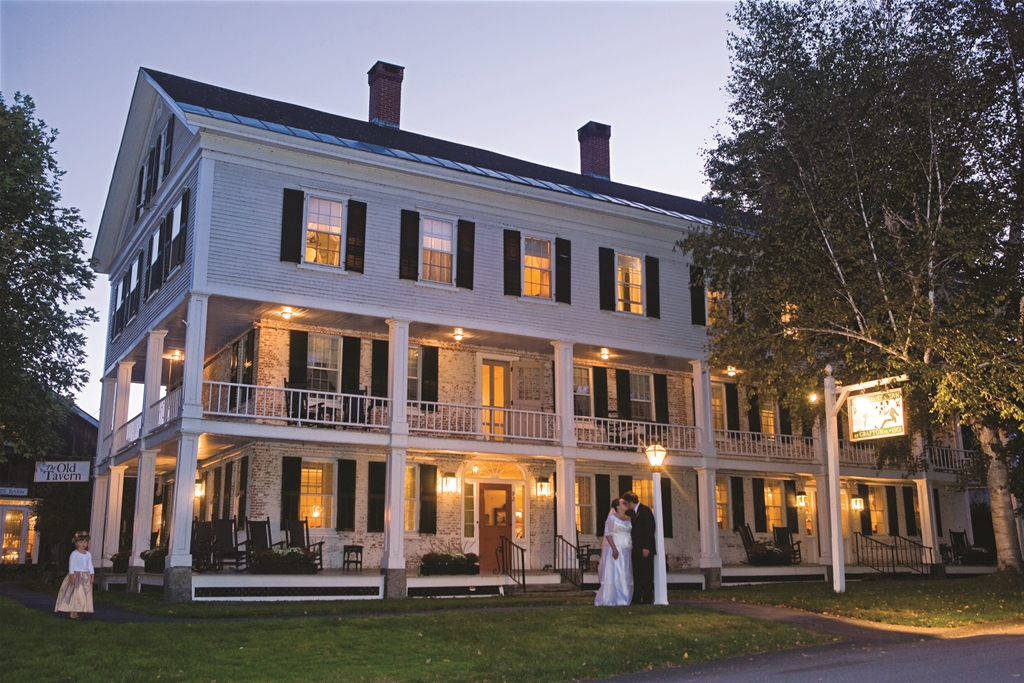
Grafton Inn 101713

By Mark Hefter, Esq., Associate Vice President of Planned Giving, American Technion Society and President-Elect, Association of Fundraising Professionals, Greater NY Chapter

I receive a graphic lesson in the power of gift planning several weekends per year from an unlikely source – the village of Grafton, Vermont. My wife and I have been visiting Grafton since we discovered it by accident on a trip to New England 30 years ago. Grafton’s people once earned a hard living farming, cutting trees, quarrying rock or milling wool. By the mid 20th Century, Grafton was a dying town, farmed, logged and mined dry.

By 1960, the world appeared to have left Grafton behind and all-but forgotten. One person who didn’t forget Grafton was Dean Mathey. Mathey, a wealthy financier from Princeton, NJ, had spent a couple of summers in Grafton as a child. The village and its surroundings must have left a profound impression. With the help of a cousin who remained in Grafton, Dean Mathey established and provided initial funding for a private foundation in 1963. Mathey died in 1972, and he left his residual estate to the foundation as additional financial support. Read more

For Birger Sandzén – A Case of Missed Fundraising Opportunities

Sandzen 102213 pic two

By Clay Myers-Bowman, Owner, Producer and Fundraising Consultant, Myers-Bowman Consulting and Productions

Chances are you’ve never heard of Swedish-American artist Sven Birger Sandzén, despite the following assessment: “Sven Birger Sandzén was the most influential – and one of the most original – artists in the history of Kansas.”

That’s the opinion of Dr. William H. Gerdts, Senior Advisor in American Art at the Pennsylvania Academy of the Fine Arts and author of one of the most authoritative art history books: Art Across America

Gerdt’s assessment, which defines Sandzén as the region’s master, is also an understatement. Sandzén’s ability in several techniques came to him by studying with accomplished artists from different schools (Olof Erlandsson, Anders Zorn, Per Hasselberg and Edmond Aman-Jean) who introduced him to pointillism and impressionism. Read more

A Critical Skill: Valuing Real Estate

Real Estate two 102913

By Melissa Bank Stepno, Senior Consultant, Target Analytics, a Division of Blackbaud, Inc.

When I started my career in fundraising, I was trained with a simple formula: a $1 million home equated to a major gift prospect rating. Even as a budding prospect researcher, this simple formula didn’t quite ‘sit right,’ but it took me a few years to pull all the pieces together.

Due to the real estate market’s explosion and later bubble burst, national economic conditions, changes in mortgage company policies, new government regulations, and other factors, what someone’s home is worth today may or may not help a fundraiser understand its relative ‘value’ to the owner. Simply stated: not every major gift prospect lives in a million dollar home and not every million dollar home is owned by a major gift prospect. Read more

The Real Wealth of New York City

200312617-001

Amy Begg, Director of Research, Harvard University and Anne Brownlee, Senior Director of Research, Yeshiva University, led a session at the Association for Professional Researchers Association’s 2013 Annual Conference that was rated outstanding. Although it addressed specific sources of wealth in NYC, the presentation will also be useful to researchers that assess wealth of prospects who live in other major cities with similar characteristics.

Conference handouts are available to APRA members.

“New York City is home to some of the wealthiest people in the world. How do you find and understand their wealth? Read more