Skip to content

Subway Ads & Fundraising: Why Peanuts Matter.

Grower of Peanuts 051613

By Gil Israeli, Director of Prospect Research and Senior Writer,

American Technion Society

(Photo source: National Peanut Board.)

New York’s Subway Ads can be inventive, funny, effective and, in this case, mirror attributes of the successful fundraiser. Real life peanut farmer Jeffrey Pittman volunteered his salt-of-the-earth appearance and ruddy cheeks to the cause.

Arriving in his freshly dry-cleaned duds, ready for the photo-shoot, he was too clean. So a girl smeared on the dirt, mostly on the jacket.

What’s today’s healthy snack? A four-part verbal fugue:  Grower – Harvester – Nurturer – Bringer Forther

We like Pittman – after all, like the best fundraisers, he’s a grower and this essential qualification can’t get any simpler… Read more
Learning Relationships, Love and Becoming a Major Gifts Fundraising Organization

Scaffolded Learning zpd 061513

By Gil Israeli, Director of Prospect Research and Senior Writer, American Technion Society

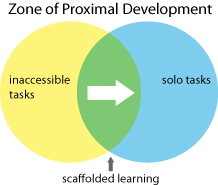
What is one critical difference between an organization that has raised several major gifts and the organization that continuously raises major gifts… maintaining a growing major gifts program?

In brief,  the latter nurtures longevity in all its relationships and understands that longevity is the key to nurturance. And, specifically, it is learning relationships that elevate organizations to raise major gifts.

Today, having a major gifts fundraising program has become one of the outstanding priorities (and sometimes wish) of many fundraising organizations. After all, you can spend two years raising small gifts of $5,000 to meet a $1,000,000 campaign goal, or, you can cultivate the same number of prospects all with $50,000 to $100,000 gift potential and target a much higher campaign goal.

The strategy to achieving this requires multiple developments in your company culture and a confluence of three critical persons in your operation: board members (which includes prospects/donors and volunteers), fundraisers and researchers. A healthy web of relationships here bears directly not only on your annual fundraising revenue but also on the robustness (and sometimes the longevity of your organization).

Read more

Who Are Your Access People? Identify and use them to reach out to major-gifts prospects.

people in networks 061513

By Gil Israeli, Director of Prospect Research and Senior Writer, American Technion Society
Appearing in Fundraising Success Magazine, May 2013

Every organization that raises (or strives to raise) major gifts faces the same challenge upon identifying a new prospect: How do I reach out to this person and develop a meaningful relationship? Unlike other types of fundraising such as direct mail, online giving, phonathons and small annual gifts, cultivation of major-gift prospects requires the critical first meeting, which can be facilitated by a door-opener or “access person.” With strong collaboration and information sharing between fundraisers and prospect researchers, the latter can play an essential role in identifying access people.

Who is an access person? He or she believes in your cause and may (or may not) be a donor. He knows your organization and, most importantly, trusts your professionalism to… Read more

What the Right Prospect Research Tool Can Do for Your Organization

research tools 062813

By Alex Quinn, Senior Account Executive, iWave Information Systems

Whatever your fundraising mission, the right prospect research tool will help you achieve your goals.

Here are your five best reasons to make the investment:

1. It will save you time.

The whole point of a prospect research tool is to make your job easier, not create more work. With the right prospect research tool, you will  be able to search quickly and easily. Even better, some of these  tools will do the work for you by allowing you to… Read more

Rusty Schweickart, Apollo 9 Astronaut, Responds About Asteroid Threats

By Russell “Rusty” Schweickart, Chairman and Co-founder, B612 Foundation and Apollo 9 Astronaut

Editor’s Note:  Rusty Schweickart contacted me with a correction and clarified the probability of asteroid impacts.

Editor: On the first point, my earlier post Fly-by on Feb.15,2013: What can asteroid 2012DA14 tell us about fundraising? incorrectly indicated that asteroid Apophis could have a possible 5.1 megaton impact in 2029 (2.7% chance which subsequently declined). Correction: 510 megatons, not 5.1.

Schweickart:  510 MT would cause regional devastation; e.g. the SF Bay Area or the NYC, CT, NJ metropolitan area.  As to lethality… Read more

Version 2.0: The Giving Pledge Globalizes

Global Giving Pledge 062813

By Bradford Smith, Foundation Center, Reprinted with permission.

They said that the Giving Pledge was “made in America,” they said that Bill and Melinda Gates and Warren Buffett didn’t understand other cultures, and that their brand of philanthropy was inappropriate for (substitute the country of your choice). They were wrong: on Tuesday, February 19, the ranks of the 93 American billionaires who have already signed the Giving Pledge — a public commitment to dedicate more than half of their fortunes to philanthropy—were joined by a dozen more representing 8 countries. In one fell swoop, the Giving Pledge has gone global.

How could the skeptics have gotten it so wrong? Since the Giving Pledge launched in 2010, wherever my travels have taken me, I have heard Brazilians, Mexicans, Europeans, and Chinese go to great lengths to explain why it would never catch on in their countries… Read more

Taking the Strategic Path to Grantseeking Success

Grant seeking 062813

By John Hicks, President and CEO, J. C. Geever, Inc.

Two of the biggest challenges grant seekers face are:

  1. choosing which foundations to approach and
  2. deciding how much to ask.

This article presents a framework for a strategic approach to grantseeking that may well help you save time and produce better results for your effort.

First, I recommend that you build a gift table based on the need for private sector support as shown in your budget. Building the gift table will enable you to:

  • Set ask amounts easily
  • Prioritize your solicitations from the top down
  • Show the potential donor how his gift fits into the overall fund-raising plan

Read more

Fly-by on Feb. 15, 2013: What can asteroid 2012DA14 tell us about fundraising?

Earth and Asteroid 062813
By Gil Israeli, Director of Prospect Research and Senior Writer, American Technion Society

On February 15th, asteroid 2012 DA 14, measuring 163 feet across, about half the size of a football field and classified by NASA as a Near Earth Object (NEO), will pass about 17,200 miles above Asia, visible with a good pair of binoculars.

According to NASA, B612 Foundation and Scientific American, DA 14 is just one of an ongoing cascade of NEO encounters. It’s hard to get a handle on the overall risk. Expert opinions vary: based on landscape research, geologists report that 100 years is a likely span for Earth-bound cosmic events; space scientists maintain that centuries or thousands of years may pass before a significant life or planet-threatening impact occurs develops.

B612 Foundation, founded by a cohort of NASA alums, former astronauts and space scientists, aims to remedy the government’s current weakness in asteroid identification and tracking. With a $500 million (plus) fundraising campaign, they plan… Read more

Where can I find information on nonprofit capacity building?

Reprinted with permission from the Foundation Center.

Answer: Capacity building is a broad term that encompasses “actions that improve nonprofit effectiveness”, in terms of organizational and financial stability, program quality, and growth. This is according to Barbara Blumenthal, author of Investing in Capacity Building: A Guide to High-Impact Approaches  (Foundation Center, 2003). Read an online excerpt of the book here.

Increasingly, foundations are providing grants to help nonprofit organizations carry out their missions more effectively. Capacity building can take many forms, such as:
•     Professional development for staff and board members
•     Opportunities for peer learning, networking or leadership development
•     Creating or re-examining organizational plans
•     Initiating collaboration with other nonprofits
•     Developing new sources for earned income

READ MORE


Update (Part 2): The Fiscal Cliff, Taxes and Charitable Giving

By Mark Hefter, Esq., Director of Planned Giving, American Technion Society and President-Elect, Association of Fundraising Professionals, Greater NY Chapter

Please refer to the chart at bottom showing, under the tax law that expired Monday night (“2012” in the chart), under the law passed by Congress yesterday (“2013”) and if all the Bush tax cuts had expired (“No Bush”) for the following:

1.   The difference in tax savings when a married couple with AGI of $1,000,000, all ordinary income, makes a charitable gift of $500,000 cash (the maximum gift they could make under the 50% of AGI limitation on charitable gifts)

2.   The difference in tax savings when a married couple with AGI of $1,000,000, all capital gains or dividends, makes a charitable  gift of $500,000 cash.

3.  How much tax the same couple would pay if they make no gifts.

Read more